Whole Life Carbon Assessments (WLC) for UK Planning & Policy Compliance
Davies Partnership provides planning-led Whole Life Carbon (WLC) consultancy to support developments in meeting the sustainability requirements of the local authority policies.
As the UK construction industry moves toward Net Zero, Whole Life Carbon Assessments are increasingly required by planning authorities and public sector clients. In Greater London, WLC reporting is mandatory for referable developments, while other UK authorities are rapidly adopting similar requirements. Our multidisciplinary team of MEP engineers and sustainability consultants delivers a design-integrated approach to reducing embodied and operational carbon without compromising project buildability.
Whole Life Carbon reporting is increasingly embedded within UK planning policy and building certification schemes. Engaging early at RIBAStage 2 or RIBA Stage 3 reduces planning risk and prevents costly late-stage redesigns.
We provide specialist WLC support to meet the following requirements:
GLA London Plan Mandatory Whole Life Carbon reporting for referable planning applications
Manchester Places for Everyone (PfE) Increasing expectations for embodied and upfront carbon assessments on major developments.
Welsh Public Sector and planning frameworks Increasing carbon reporting requirements linked to Welsh Government Net Zero policy and public sector funding programmes.
Scotland, NPF4 Policy 2 and the Net Zero Public Sector Buildings Standard Mandate Lifecycle Greenhouse Gas Assessments for all major and publicly funded developments
BREEAM/ LEED Certification Lifecycle carbon assessment (LCA) underpins key credits such as BREEAM Mat 01 – Life Cycle Impacts.
Many local authorities now expect carbon assessments for major developments Often informed by industry guidance published by organisations such as LETI, UK Green Building Council and RIBA.
Planning-Led WLC Delivery: How We Support Your Project
We bridge the gap between complex carbon data and practical building design. Our role is to make your project the “path of least resistance” for planning officers and investors.
Planning-ready Whole life carbon reporting
Clear auditable outputs suitable for planning submissions and funding reviews.
Early Stage carbon optioneering
Targeted comparison of structural, material and building system options to reduce upfront carbon before designs are locked in.
Design-integrated approach
WLC assessment embedded with mechanical, electrical and sustainability design.
Low Carbon Supply Chain & Procurement assistance
Identification of practical low-carbon materials and suppliers aligned with project constraints.
Is Our Whole Life Carbon Consultancy Right for You?
We support teams through the most critical stages of the development lifecycle:
Developers: Navigating referable planning applications and emerging carbon reporting requirements.
Housing Associations: Meeting Net Zero Housing targets and securing government funding.
Local Authorities: Establishing benchmarks for public sector decarbonisation.
Architects & Design Teams: Integrating technical carbon data into the early-stage design decisions and material selection.
Early Whole Life Carbon assessment provides the greatest opportunity to reduce carbon, cost and planning risk.
Proven Impact: UK Case Studies
London GLA Compliance Client Housing 21 Sector Residential Location Richmond, London Design Team Hunters, Davies Partnership, Knight Frank
The Challenge
Secure pre-planning approval under strict GLA London Plan carbon targets.
Davies Partnership Role
Integrated assessment of embodied and operational carbon emissions conducted at Stage 3.
The Outcome
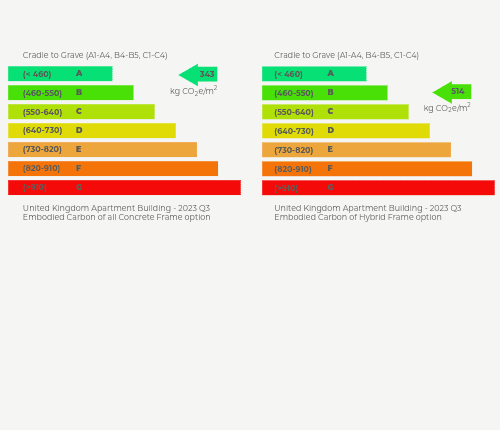
Achieved up to 45% carbon reduction through design-stage optioneering, ensuring a GLA-compliant submission.
Liverpool Public Sector Funding Client Liverpool City Council Sector Residential Location Riverside Drive, Liverpool Design Team Vistry, JDA Architects, Shape Consulting, Davies Partnership, BCA Landscape
The Challenge Demonstrate a low-carbon construction strategy for a major resi development.
Davies Partnership Role Structural frame and foundation optimization to identify “carbon hotspots.”
The Outcome
Delivered a planning-ready WLC report that secured bid alignment with Liverpool City Council’s sustainability objectives.
Design stage optioneering to reduce embodied carbon in structure, foundation and materials.
North Wales Net Zero Housing Client Clwyd Alyn Sector Residential Location Buckley, North Wales Design Team John McCall Architects, IE Engineering, Drees & Sommer, Davies Partnership
The Challenge Align with Welsh Social Housing Net Zero targets to secure funding.
Davies Partnership Role Detailed geographic supply chain mapping and material optioneering to support side wide WLC targets
The Outcome
Geographic supply chain map to support early design and procurement discussions.
Provided a baseline and low-carbon roadmap that maintained contractor flexibility while meeting strict Welsh guidance.
Manchester Places for Everyone (PfE) and Truly Affordable Net Zero Homes (TANZ) compliance Client McGoff Group Sector Residential – Large Major Location Rochdale, Greater Manchester Design Team Jon Matthews Architects, Booth King, Davies Partnership
The Challenge
To deliver a high-density residential scheme that meets the stringent embodied carbon targets set out by the Greater Manchester Places for Everyone (PfE) Policy JP-S2. The project required a balance between structural integrity for a tall building and significant carbon reductions to align with TANZ standards.
Davies Partnership Role
Upfront and embodied carbon assessments and iterative design consultation to optimize the building form and material specifications.
The Outcome
Delivered a robust, planning-ready embodied carbon report that supported the planning application.
Achieved a 48% reduction in embodied carbon compared to baseline, significantly exceeding the PfE targets without additional costs.
Whole Life Carbon is the total Greenhouse Gases emitted throughout a building’s lifecycle, from the raw materials used in construction, through to the electricity used to run the building, right up until the demolition and end of life treatment of the building’s materials.
A Whole Life Carbon Assessment (WLCA) provides a comprehensive view of a building’s environmental impact, helping to identify significant emission points and achieve net-zero goals by considering both embodied and operational carbon together.
Whole Life Carbon (WLC) includes both embodied carbon and operational carbon emissions throughout a building’s life – from design to demolition.
Embodied Carbon: Emissions from material extraction, manufacture, transport, and installation.
Operational Carbon: Emissions from energy and water used to run the building.
Whole Life Carbon: The sum of both, along with the constant repair, replacement and end of life offering a complete picture of the environmental footprint of the building.
The most effective time to begin a WLC assessment is during early design stages (RIBA Stage 2–3), when key design decisions are still flexible.
However, different local authorities may require WLC assessments at various stages of the development process, including:
Pre-application stage
Planning application stage
Post-construction verification
Engaging early allows the design team to identify opportunities to reduce carbon before designs are finalised.
At RIBA Stage 2, a WLC assessment can typically begin using the following design information:
Building floor plans, elevation and section drawings
Typical wall and floor build-ups
Structural systems and material specifications
Outline MEP strategies
For a full Whole Life Carbon assessment, an energy strategy and energy modelling outputs are also required to account for operational carbon emissions.
A typical Stage 2 WLC assessment usually takes about 1-3 weeks, depending on
The availability of design information
Project size and complexity
Planning submission deadlines.
Early-stage studies can often be completed quickly to support the design team in material selection and design optioneering.
Yes. Early carbon modelling can identify material and system choices that reduce both carbon impact and project costs.
While cost savings cannot always be guaranteed, Whole Life Carbon assessments often highlight more efficient structural systems, material choices, or building services strategies. Our approach is to work alongside the design team to balance carbon reduction, cost, and buildability.
WLC assessments are increasingly expected for:
Major residential developments
Commercial buildings
Public sector or government-funded projects
Developments targeting BREEAM, LEED, or Net Zero standards
Yes. Planning authorities increasingly expect developments to demonstrate a clear strategy for reducing carbon emissions.
A robust Whole Life Carbon report shows that the design team has actively considered carbon reduction and aligns the project with local Net Zero policies, helping to streamline the planning review process.
By using our website functional cookies will be applied. We use Google Analytics reports to better understand the traffic and users navigation habits on our website. By using Davies Partnership you accept our use of cookies. Read our Cookies Policy for more information about the cookies our website uses.